




Hebei YUNAI New Material Technology Exhibits At Indometal Indonesia 2026, Booth C3-6905
Release Time:
Nov 06,2026
Hebei YUNAI New Material Technology Co., Ltd. exhibited at the Indonesia International Metallurgy and Foundry Exhibition, held from 9 to 12 September 2026 at the Jakarta International Expo. At booth C3-6905, a two-person team presented graphite petroleum coke (GPC), calcined petroleum coke (CPC) and graphite electrodes, supported by six specification panels covering the plant, both process routes, the full product range, inspection and packaging.

Indonesia has been expanding steelmaking and foundry capacity at the same time, with nickel-linked investment in stainless and alloy smelting pushing local purchasing of upstream carbon materials away from trading intermediaries and toward direct contact with factories. That shift does not appear in a show catalogue, but it shows up in the questions asked at a booth: fewer about price, more about sulphur ranges, particle size bands and arrival dates.
From 9 to 12 September 2026, the Indonesia International Metallurgy and Foundry Exhibition ran at the Jakarta International Expo. Metallurgy and foundry shared the halls, placing steel mills, foundries, die casters and traders on one route — for a Chinese carbon materials supplier, one of the few occasions in Southeast Asia to meet all three buyer types in a single trip, and a live calibration of what local purchasing now expects.
Hebei YUNAI New Material Technology Co., Ltd. took booth C3-6905 with three product lines: graphite electrodes, calcined petroleum coke and graphitised petroleum coke. The three map onto three process steps. Electric arc and submerged arc furnaces need graphite electrodes as both conductor and heat source; iron, steel and some alloy melting rely on recarburisers to restore carbon; and the feedstock behind electrodes, prebaked anodes and recarburisers is calcined petroleum coke. Read the chain and it becomes clear why three apparently unrelated samples sat together on one counter.
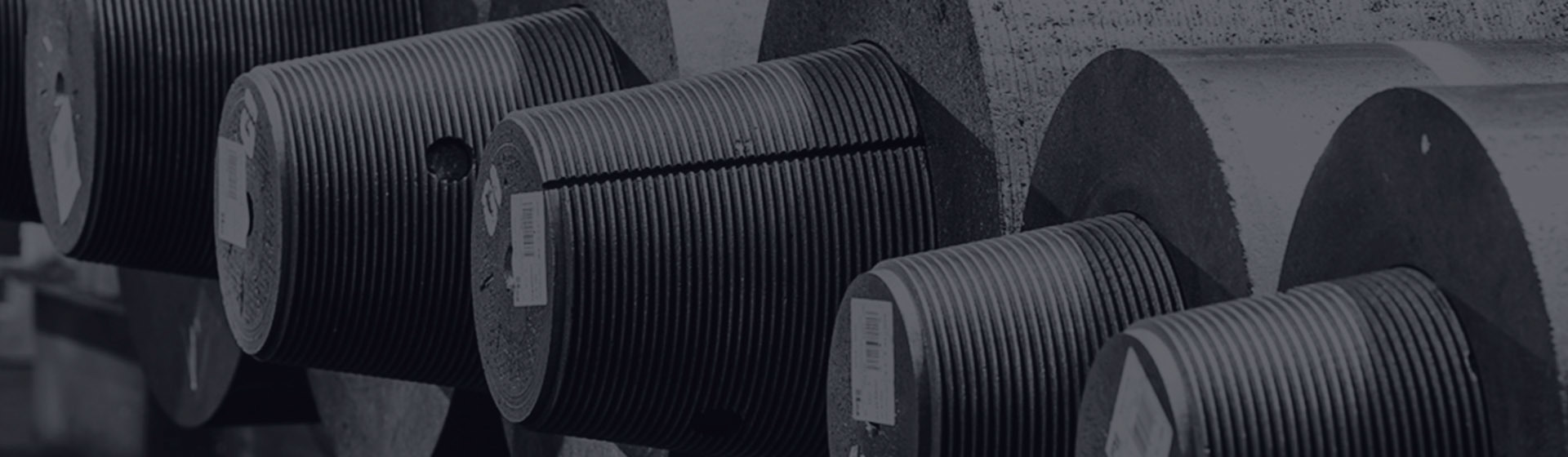
Graphite electrodes sit at the front of that chain. In an electric arc furnace they conduct current and generate heat at once, so power consumption per tonne, breakage rate and service life depend on resistivity, flexural strength, bulk density and the fit precision of the joint. For a market like Indonesia, dominated by short-process electric steelmaking with furnace sizes growing year by year, joint quality on large-diameter electrodes often matters more to real cost than nominal body figures — a single break costs far more than the price spread on the electrode itself.
Graphitised petroleum coke addresses carbon control at the melting stage. It enters the charge as a recarburiser, where fixed carbon, sulphur, nitrogen, ash and particle size distribution set absorption rate and consistency: high sulphur degrades nodularisation and inoculation, high nitrogen tends to produce porosity in heavy sections, and high ash converts directly into slag inclusions. Many Indonesian foundries run induction furnaces with small capacities, frequent grade changes and many batches, so sensitivity to the spread of furnace-side analysis within one particle size runs higher than at large mills.
Calcined petroleum coke sits one step further upstream. Green coke is calcined in rotary or shaft kilns; volatiles are driven off and the structure densifies, lifting true density, resistivity and mechanical strength. The calcination curve and soaking time fix the final figures, and they decide whether the material can enter the feedstock sequence for graphite electrodes, prebaked anodes or recarburisers. Buyers at this layer rarely purchase directly, but they read a supplier's raw-material control back through the quote.
The booth fascia carried the company's full English name in black on white, with C3-6905 set at the right end of the band — laid out horizontally rather than stacked on a red strip as at Chinese shows, so the number reads from two booths away in the aisle. Above it hung the joint-pavilion backdrop, indicating a group participation. The stand itself was a standard open design: a glass round table with four white chairs at the front, a white counter to the left holding sample tins and brochures.
Behind the counter, six panels carried the substance of the exhibit. The first was the plant: a factory in Hebei covering 80,000 square metres, equipped with automated production and processing lines, about 300 kilometres from Tianjin port. For an Indonesian buyer, that last figure is more useful than the floor area — it sets the flexibility of the consolidation window and the shipping schedule, and decides whether an urgent replenishment can still catch a vessel.
The next two panels covered the process routes. The graphite electrode panel broke manufacturing into five stages — forming, baking, impregnation, graphitisation and finishing — illustrated with shop-floor photographs and a note that PLC and CNC equipment handle machining and inspection, with every electrode checked before dispatch. Laying out the stages is not a display of scale; it lets a buyer see where the schedule bottleneck sits, and graphitisation, with its long cycle, is usually the hardest link to compress.
The CPC and GPC panel covered calcination and graphitisation: rotary kiln calcination, screening, graphitisation furnace and crushing and screening, joined into a fully enclosed automated line, with emphasis on sulphur control and batch stability. For a recarburiser buyer, "fully enclosed" is worth something specific — dust and contamination control feed straight into the repeatability of furnace-side analysis.
A fourth panel listed the full range: calcined petroleum coke, graphitised petroleum coke, graphite electrodes, graphite squares, calcined anthracite and carbon raiser. The fifth and sixth covered inspection and packaging — testing running through the production process, and ton bags, woven sacks and pallets matched to sea freight and multi-leg transfer. Coke is vulnerable to moisture and electrodes to impact, so in a market that requires secondary transport, packaging is part of quality rather than a cost line.
The specification panel on the right drew the longest stops. Calcined petroleum coke was banded at 1–3 mm, 0.2 mm and 1–5 mm; graphitised petroleum coke at 3–25 mm and 2–8 mm; and the table ran across fixed carbon, sulphur, ash, volatile matter, moisture and particle size. With parameters on the wall, negotiation settles on specific figures rather than on "how much cheaper" — a pattern especially visible in Southeast Asia, where buyers arrive with the previous shipment's assay sheet and compare cell by cell.
The physical samples were more direct still. A row of tins along the counter, white and yellow lids marking different categories, held granules of different particle sizes; beside them a short graphite electrode section sat on a wooden cradle with the end face and threaded joint exposed, so machining accuracy and surface treatment could be judged directly. Visitors handling electrodes usually twist the joint first and look at the end face second — two steps that build a judgement faster than any table.
Two people staffed the stand for the run of the show: one on product indicators and samples, the other on quotations, documents and scheduling, switching over when a technical detail came up. Questions clustered in five places: how low sulphur could be held, whether particle size could be banded, ton bags or 25 kg sacks, minimum trial order and arrival time, and whether test reports were in-house or third-party. Clearance time at Jakarta and inland transfer costs also pushed conversations toward delivered prices rather than FOB.
It is worth stating plainly that exhibiting abroad does not by itself produce orders. Indonesian buyers are highly price-sensitive on imported carbon materials, with local traders and Japanese and Korean suppliers holding the low and high ends respectively; the position a Chinese factory can occupy is usually the middle ground of published parameters, stable batches and committed lead times. That is why the specification tables, inspection panel and packaging board were brought to the booth: in a market with high trust costs, what can be shown is worth more than what can be promised.
Hebei YUNAI New Material Technology Co., Ltd. supplies graphite electrodes, calcined petroleum coke and graphitised petroleum coke to electric steelmakers, foundries, die casters and carbon product manufacturers, with particle size, packaging and testing arranged to buyer specification and batch-level inspection records provided. At this edition the company staffed booth C3-6905 with a two-person team, meeting steel mills, foundries and traders on indicators, packaging and scheduling, and following up after the show with samples and specification sheets for trial orders.
Contact
Company: Hebei YUNAI New Material Technology Co., Ltd.
Office: Huilong International Building, Qiaoxi District, Shijiazhuang City, Hebei Province, China
Phone / WhatsApp: +86 195 6568 9529
Email: David@yncarbon.com
Website: yncarbon.com
Keywords:
More information


