




Yunai at Expo Acero Veracruz 2026: Three Carbon Product Lines at Booth H
Release Time:
Nov 17,2026
Our team exhibited at the 2026 Mexico International Steel Exhibition (Expo Acero Veracruz), held from 23 to 25 March 2026 at WTC Veracruz, at booth H, with graphite electrodes, calcined petroleum coke and graphitised petroleum coke on the stand.

Mexico's steel demand over the past two years has been pulled forward by manufacturing relocation. Automotive, appliance and machinery lines have clustered into the northern and central industrial belts, stamping, casting and fastener plants have followed, and as steel and casting volumes rose, so did enquiries and payment terms upstream in carbon materials. Local steelmaking runs mainly on the electric arc route: scrap into the furnace, electrodes carrying the current. That route makes graphite electrodes not an optional consumable but a production input consumed furnace by furnace. We came to Veracruz to set that chain out face to face.
From 23 to 25 March 2026 the Mexico International Steel Exhibition took place at the World Trade Center in Veracruz, branded on site as Expo Acero Veracruz, and our booth was H. On opening day the aisles of Hall TAJÍN 3 filled with exhibitors and with representatives of local steelmakers and foundries; officials and industry association representatives cut the ribbon on stage, and most of the crowd below held up phones with a purchasing list folded in the other hand.
We put the three samples on one counter because each sits on a different process step. Electric arc and refining furnaces use graphite electrodes as conductor and heat source, and both power consumption per tonne and breakage rates are charged to them; iron, steel and some alloy melting rely on recarburisers to bring carbon back to target while holding sulphur and nitrogen down; and the feedstock behind electrodes, prebaked anodes and recarburisers is calcined petroleum coke. With all three steps at one table, a buyer can work out total cost.
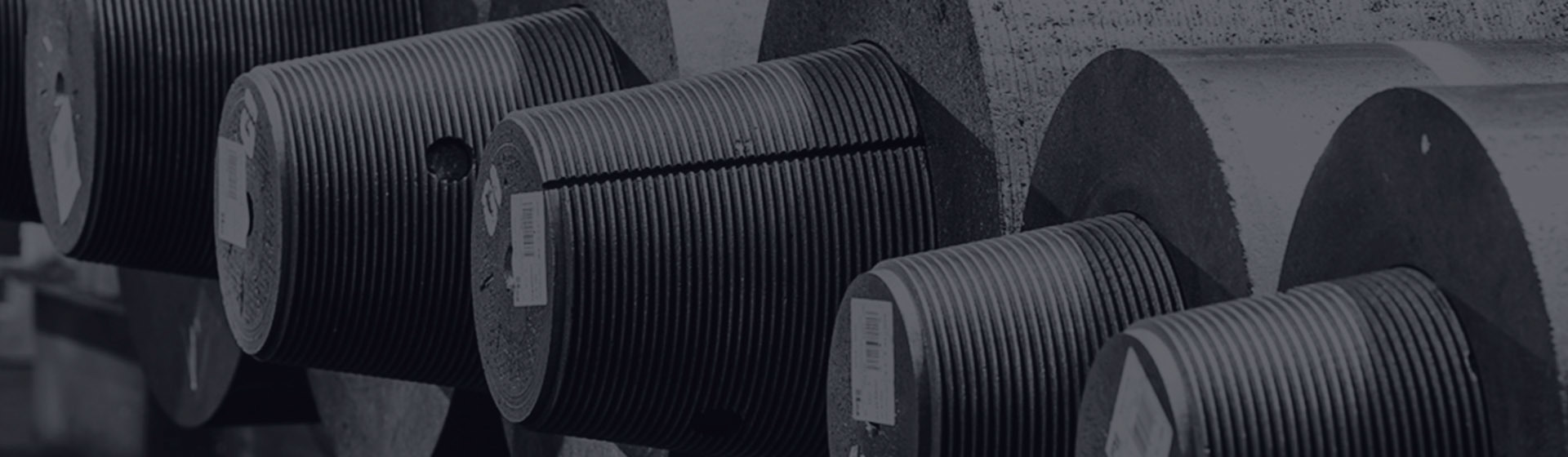
Graphite electrodes drew the most detailed questions at our stand. Diameter sets the match between current density and furnace type, grade sets the margin on resistivity and flexural strength, and nipple accuracy decides whether a column breaks at the furnace top. For electric steel customers the real cost of imported graphite electrodes is not the unit price alone: one break costs far more in lost furnace time than the discount it was traded against. So the first question we heard was usually which diameter range we run, and price came second.
Recarburisers are judged on finer criteria. The fixed carbon, sulphur, nitrogen, ash and particle size distribution of graphitised petroleum coke determine absorption and consistency inside the furnace; high sulphur hurts nodularity, high nitrogen tends to leave porosity in heavy sections. Buyers are not checking the nominal figure but whether consecutive batches of the same grade land in the same range on the assay sheet, and that can only be answered with retained samples and inspection records.
Calcined petroleum coke sits further upstream. Green coke is calcined in a rotary kiln, volatiles are driven off and the structure densifies, lifting true density, resistivity and mechanical strength; the calcination curve and soaking time set the final figures and decide whether the batch can enter graphite electrode, anode or recarburiser production. Long-term buyers care about a steady supply of low-sulphur green coke, not one cheap lot.
Across the three days we attended as a team, and our advantages at this show came down to six points.
The first is single-source supply across three steps. Graphite electrodes, calcined petroleum coke and graphitised petroleum coke come out of one quality standard, so a buyer does not need three suppliers for three process steps, and when an indicator drifts there is no three-way argument over whose material caused it. For Mexican buyers who order small volumes in many batches, that is worth more than a lower quote.

The second is coverage. Our calcined petroleum coke is graded at 1-3mm, 0-0.2mm and 1-5mm; our graphitised petroleum coke at 3-25mm and 2-6mm among other ranges; our graphite electrodes cover both HP and UHP grades across several diameter ranges with matching lengths. On the stand, against granularity photos and specification tables, buyers could confirm whether the exact grade they need exists.
The third is verifiable paperwork. One side of our stand carried ISO quality management certification together with SGS test reports. The distinction is worth stating plainly: a system certificate proves the management process, a test report proves the measured values of a specific batch, and neither substitutes for the other. That point came up repeatedly in conversation and is where professional buyers look first.
The fourth is the way we present the data. Mexican buyers work mainly in Spanish, and technical talk through an interpreter loses precision, so our specification tables are built graphically: particle sizes paired with photographs, grades paired with parameter ranges, electrodes paired with diameter and length. When language fails, a readable table does more than ten minutes of explanation.
The fifth is what a team makes possible on the stand. As a team at this show, we could settle indicators, samples, quoting basis and lead time in one conversation: ask about a particle band and the matching sample and specification sheet were to hand; ask about loading and documents and the position could be stated on the spot. For buyers who would otherwise need internal sign-off, one fewer "we will check and revert" is one shorter wait, and when two sets of parameters needed comparing there was someone beside them to go through both.
The sixth is location. The venue sits inside Veracruz, one of the main ports on the Gulf of Mexico, so ocean arrival, customs clearance and inland transfer can be laid out on the spot. Nearshoring brings not only orders but higher expectations on lead time and document consistency.
Over three days the questions we heard most were: what sulphur range does this batch hold, can you screen to my particle band, what is the minimum trial order, do test reports ship with the goods or follow later, and how long from China to Veracruz. Behind them sits one judgement: Mexico is not purely a low-price market. It looks harder at whether the paperwork is complete, whether batches hold, and whether the lead time can be written into a contract. The show closing is not the end of the work; sampling and validation over the following weeks are the real continuation of these three days.
We supply graphite electrodes, calcined petroleum coke and graphitised petroleum coke to electric steelmakers, foundries, forging shops and carbon product manufacturers, with particle size, packaging and inspection arranged to buyer specification and third-party inspection accepted at the factory or before loading. For samples or specification sheets, contact us directly.
Contact:
• Company: Hebei Yunai New Material Technology Co., Ltd.
• Office: Huilong International Building, Qiaoxi District, Shijiazhuang, Hebei, China
• Phone / WhatsApp: +86 195 6568 9529
• Email: David@yncarbon.com
• Website: yncarbon.com
Keywords:
More information


